

KitchenAid Refrigerator Missing Evaporator Fan in Fort Lauderdale, FL
Verified Repair Report™ — RR0143
Service Summary
- Appliance Category: Built-In Refrigerator
- Brand: KitchenAid
- Model Number: KBRC36FMSS00
- Service Location: Fort Lauderdale, FL 33301
- Primary Symptom: Not specifically documented
- Diagnosis: Evaporator Fan Missing
- Recommended Repair: Obtain and Install Replacement Evaporator Fan
- Repair Status: Diagnosis Completed — Replacement Evaporator Fan Required
The customer's original description of the refrigerator problem was not preserved in the available service documentation.
What the technician found during diagnosis, however, was unusually specific:
The refrigerator's evaporator fan was missing.
The service notes state:
“Evaporator fan is missing. Need to get a new one.”
The customer paid the service fee, but the available record does not document installation of the replacement fan.
For that reason, RR0143 records a confirmed diagnosis and required repair, not a completed repair.
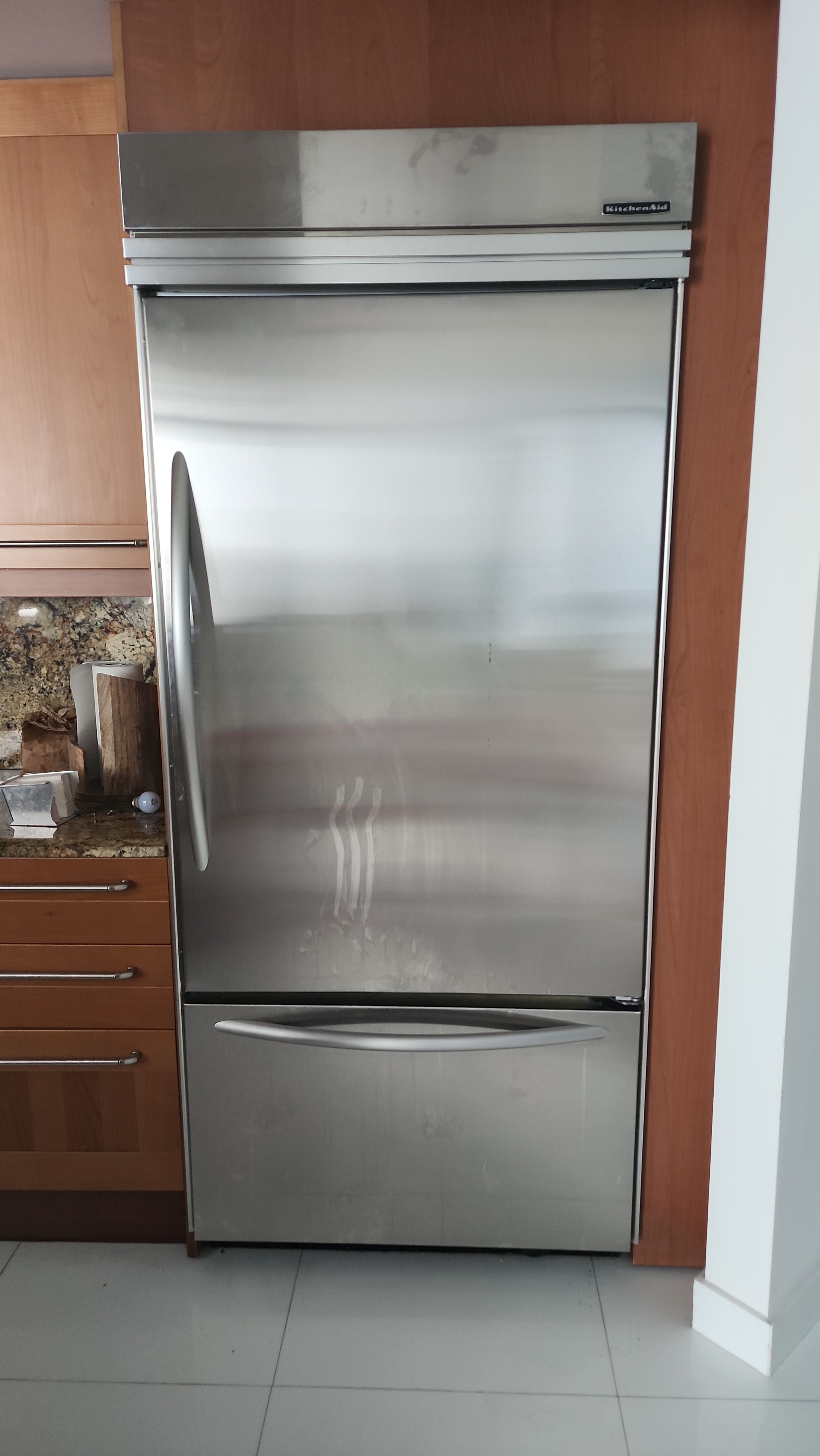
Service Overview
| Brand: | KitchenAid |
| Appliance: | Built-In Refrigerator |
| Model: | KBRC36FMSS00 |
| Problem Reported: | Not explicitly documented |
| Diagnosis: | Evaporator fan missing |
| Recommended Repair: | Obtain/install replacement fan |
| Outcome: | Diagnosis Completed — Repair Required |
| Repair Complexity: | Moderate |
| Technician: | The Appliance Experts |
| Repair Report #: | 0143 |

Refrigerator Identification
Field evidence identifies the appliance as a:
KitchenAid Built-In Refrigerator
Model KBRC36FMSS00
The manufacturer's identification label also shows a manufacture date of:
October 2004
That makes the appliance approximately 22 years old at the time of this 2026 service event.
The age is relevant to a repair-versus-replacement discussion, but it does not by itself determine whether the refrigerator should be repaired.
The component involved matters too.

What the Technician Found
The documented finding was not simply that an evaporator fan had stopped operating.
The technician specifically recorded that the:
Evaporator fan is missing.
That distinction matters.
A failed fan motor can be present in the refrigerator but unable to operate correctly.
A missing fan means the required component itself was not present when the appliance was inspected.
The available service documentation does not explain why the fan was missing, when it was removed, or whether it had been removed during previous service. RR0143 therefore does not speculate about the cause.
It records only what was observed: The refrigerator requires an evaporator fan because the component was missing.

Recommended Repair
The documented next step was to obtain a replacement evaporator fan.
The service notes state:
“Need to get a new one.”
At the time represented by this report, installation of that replacement fan has not been documented.
Therefore:
• Diagnosis: Complete
• Required component: Evaporator fan
• Component installation: Not yet documented
• Successful post-repair operation: Not yet documented
If a subsequent service visit documents installation of the fan, RR0143 can be updated with the completed repair and any post-repair operating result.
What Does a Refrigerator Evaporator Fan Do?
The evaporator fan plays an important role in many refrigerator cooling systems.
The evaporator becomes cold as part of the refrigeration process. The evaporator fan then helps move air across the evaporator and circulate that cold air through the areas of the refrigerator designed to receive it.
Without appropriate airflow, cold produced at the evaporator may not be distributed through the appliance as intended.
The exact airflow path varies by refrigerator design, but the basic relationship is important:
Producing cold and distributing cold are not the same job. The refrigeration system can create a cold evaporator while an airflow problem prevents that cooling from reaching other areas effectively.
Why an Evaporator-Fan Problem Can Look Like a Major Cooling Failure
When a refrigerator isn't maintaining temperature correctly, homeowners may understandably suspect the compressor.
But poor cooling doesn't automatically mean the sealed refrigeration system has failed. A refrigerator also depends on airflow.
Problems involving the evaporator fan can potentially create symptoms that resemble a larger refrigeration failure because cold air isn't being circulated normally.
That is one reason component-level diagnosis matters before making a repair-versus-replacement decision.
In RR0143, the documented finding concerns the evaporator fan, not a documented compressor or sealed-system failure.
Missing Fan vs. Failed Fan Motor
RR0143 presents an important diagnostic distinction.
Failed Evaporator Fan
The fan assembly is present but doesn't operate properly. Potential causes could involve the fan motor itself, electrical supply, wiring, controls, ice obstruction or other conditions depending on the refrigerator design.
Missing Evaporator Fan
The required component isn't present. That is the condition documented in RR0143. Because the component itself was missing, obtaining the appropriate replacement fan became the required next repair step.
Could a Refrigerator Still Get Cold Without the Evaporator Fan?
Parts of a refrigerator may still become cold even when normal evaporator airflow isn't occurring.
That's because the evaporator and refrigeration system can potentially continue producing cold while the appliance has difficulty distributing it. Whether and how long the refrigerator can maintain safe temperatures depends on its design and the specific condition.
A refrigerator that feels cold in one area therefore doesn't necessarily prove that its airflow system is operating correctly.
Does a Missing Evaporator Fan Mean the Compressor Is Bad?
No. The evaporator fan and compressor perform different functions.
The compressor is part of the sealed refrigeration system. The evaporator fan is primarily involved in moving air. A refrigerator can therefore have an airflow-system problem without having a failed compressor.
RR0143 contains no documented compressor diagnosis. The documented component issue is the missing evaporator fan.
Repair vs. Replacement on an Older Built-In Refrigerator
This service event creates an especially interesting repair-versus-replacement question because the KitchenAid identification label dates the appliance to October 2004.
Age matters. But age alone doesn't answer the repair question.
Factors worth considering include:
• The specific failed or missing component
• Overall refrigerator condition
• Cooling-system condition
• Parts availability
• Repair cost
• Whether additional failures are present
• Installation configuration
• Cost of a comparable replacement appliance
That last consideration can be particularly important with a built-in refrigerator.
Replacing a built-in appliance can involve considerations beyond simply purchasing another freestanding refrigerator. Dimensions, cabinetry, installation and available replacement configurations can all affect the economics.
For RR0143, however, the documented service record stops at diagnosis. It does not document a customer repair-or-replace decision. Therefore, this report does not assume one.
Why Appliance Age Alone Isn't Enough
A 22-year-old refrigerator with a failed compressor can present a very different economic decision from a 22-year-old refrigerator requiring a replaceable airflow component.
Likewise, an older refrigerator with multiple simultaneous major failures presents a different decision from one with a single isolated problem.
That's why asking only: “How old is the refrigerator?” doesn't provide enough information.
A better question is: “What actually failed, what will it take to repair it, and what condition is the rest of the appliance in?”
RR0143 gives us one part of that answer: The evaporator fan was missing and a replacement was required.

Repair Intelligence™
RR0143 adds an unusual refrigerator diagnosis to The Appliance Experts™ Repair Intelligence™ records.
• At the appliance level: KitchenAid Built-In Refrigerator
• At the system level: Refrigerator Airflow / Evaporator System
• At the component level: Evaporator Fan
• At the condition level: Component Missing
• At the service-outcome level: Diagnosis Completed — Repair Required
And importantly: Completed component replacement: 0
That final distinction prevents a recommended repair from being counted as a repair that actually occurred.
The service record tells us what needs to happen next. It does not yet tell us that it happened.
Why This Distinction Matters in Repair Data
A service record can contain several different stages:
Problem reported → Diagnosis performed → Component identified → Repair recommended → Part ordered → Part installed → Appliance tested → Successful operation documented
Those stages shouldn't be treated as interchangeable.
RR0143 has reached the diagnosis and repair-recommendation stages. The available evidence does not yet establish installation or successful operation.
Therefore, Repair Intelligence™ preserves it as: Diagnosis documented — repair not yet documented.
What Else Can Cause Refrigerator Airflow Problems?
A missing or failed evaporator fan isn't the only possible cause of poor refrigerator airflow.
Depending on appliance design, airflow problems can potentially involve:
• Evaporator fan motor
• Fan blade
• Ice buildup around the evaporator
• Blocked air passages
• Damper problems
• Wiring
• Temperature sensors
• Electronic controls
• Defrost-system problems
That's why a cooling complaint shouldn't automatically be converted into a fan diagnosis without inspecting the appliance. RR0143 is different because the technician directly documented that the fan itself was missing.

Homeowner Checks for a Refrigerator With Poor Airflow
There are a few observations homeowners can make without disassembling the appliance.
✅ Check temperatures: Notice whether both the refrigerator and freezer are affected or whether one compartment is substantially warmer than the other.
✅ Look for blocked interior vents: Food containers shouldn't obstruct designated air passages.
✅ Listen for changes: A refrigerator that previously produced a normal fan sound but suddenly becomes unusually quiet may provide useful diagnostic information. Likewise, scraping, buzzing or repeated fan noises can be worth reporting to the technician.
✅ Look for unusual frost: Heavy frost can sometimes interfere with airflow and may indicate a separate defrost-system problem.
⚠️ Avoid unnecessary disassembly: Internal refrigerator components can involve electrical, mechanical and refrigeration-system hazards. If diagnosis requires access to the evaporator area, professional service is generally appropriate.
Common Symptoms Associated With Evaporator-Fan Problems
Depending on the refrigerator design and nature of the fan problem, possible symptoms can include:
⚠️ Refrigerator compartment warmer than expected
⚠️ Uneven temperatures
⚠️ Reduced airflow from refrigerator vents
⚠️ Freezer temperatures behaving differently from refrigerator temperatures
⚠️ Food not staying sufficiently cold
⚠️ Refrigerator running for extended periods
⚠️ Unusual noises when a failing fan attempts to operate
⚠️ No normal fan sound when the fan should be operating
These are general examples. They are not being attributed to the customer in RR0143, because the customer's original complaint was not documented in the available service record.
Machine Information
Brand: KitchenAid
Appliance: Built-In Refrigerator
Model: KBRC36FMSS00
Repair Report: 0143
Repair Status: 🟡 Diagnosis Completed — Repair Required
Location: 📍 Fort Lauderdale, FL 33301

Repair Classification
🟡 Diagnosis Completed — Replacement Evaporator Fan Required
Reliability Index Entry
| Brand | Appliance Category | Failure Mode | Failed Component / Condition | Repairability |
|---|---|---|---|---|
| KitchenAid | Built-In Refrigerator | Refrigeration Airflow / Evaporator Fan | Evaporator Fan Missing | Diagnosed Only (Repair Pending) |

Frequently Asked Questions
What happens if a refrigerator evaporator fan is missing?
The refrigerator may have difficulty circulating cold air through the appliance as designed. The exact effect depends on the refrigerator's airflow configuration, but normal temperature distribution can be compromised.
Can a refrigerator cool without an evaporator fan?
The evaporator may still become cold, but without proper fan operation, the refrigerator may not distribute that cold air normally. This can lead to uneven or inadequate cooling.
Is an evaporator fan the same as the condenser fan?
No. They perform different jobs and are located in different areas of the refrigeration system. The evaporator fan helps circulate air around the evaporator and through the refrigerated compartments, while a condenser fan on designs that use one assists with heat rejection around the condenser/compressor area.
Does an evaporator-fan problem mean I need a new refrigerator?
Not automatically. An evaporator fan is a component. Whether repair makes sense depends on the appliance's age, overall condition, parts availability, repair economics and whether other significant failures exist.
Is a 22-year-old built-in refrigerator worth repairing?
Possibly, but age alone isn't enough to answer the question. The specific repair, overall appliance condition, parts availability and cost of replacing a comparable built-in refrigerator all matter. RR0143 documents the required component but not the customer's final repair-or-replace decision.
Why would an evaporator fan be missing?
There are several conceivable explanations, but the service record doesn't document why this fan was absent. Rather than speculate, RR0143 records only the verified condition: The evaporator fan was missing when the refrigerator was inspected.
Can I install an evaporator fan myself?
The difficulty varies considerably by refrigerator design. Access may require removal of interior panels and work around wiring, fan assemblies and evaporator components. Care must also be taken not to damage refrigeration-system tubing. The appropriate approach depends on the specific appliance and the person's repair experience.
Will installing the fan guarantee the refrigerator works normally?
Not necessarily. Replacing a confirmed missing component addresses that specific problem, but successful refrigerator operation should still be verified after installation. That's why RR0143 will not be changed to Successfully Repaired unless subsequent service documentation supports that outcome.
Professional Diagnosis. Honest Repair Recommendations.™
Serving Fort Lauderdale, FL and the surrounding Broward County communities with transparent, reliable appliance repair.
Explore More Verified Repair Reports™
See more real appliance diagnoses and repairs in our Verified Repair Reports™ Hub. View Hub →

Continue Exploring
🔧 Related Repair Reports
❄️ KitchenAid Refrigerator Not Defrosting Ice Maker Repair Coral Springs FL
🏠 Appliance Repair Services & Locations
🏷️ KitchenAid Appliance Repair
🛠️ Refrigerator Repair Services
💡 Appliance Care Resources
❄️ How To Diagnose Your Refrigerator For Cooling Problems?
Need Refrigerator Repair?
If your appliance is having a similar problem, The Appliance Experts can help diagnose the issue and explain your repair options.
📞 (954) 256-1622 Call or Text★★★★★ Trusted by South Florida Homeowners.
✔ Honest Recommendations
✔ Experienced Technicians
✔ Detailed Repair Reports
Serving Broward, Miami-Dade & Palm Beach County
The Appliance Experts
Trusted appliance repair professionals serving homeowners throughout South Florida with expert repairs, genuine replacement parts, and detailed Repair Reports™.
Repair Reports™ are based on actual technician service calls performed by The Appliance Experts. Individual appliance failures and repair recommendations may vary.
© 2026 The Appliance Experts. All Rights Reserved.
Privacy Policy | Terms of Service | Contact Us